















For producers chasing bigger vocals, wider synths, and more animated transitions without drowning in automation lanes, Space Rider arrives with a surprisingly practical solution. Built around an all-in-one workflow combining reverb, delay, and chorus, the plugin’s real innovation is its “Rider” system — a dynamic modulation engine that turns static effects into evolving textures in seconds.
Available now for $39.99 through Waves Audio Space Rider, the plugin feels designed for modern producers working quickly across hip hop, R&B, trap, drill, electronic, and cinematic production styles.
For more gear and software breakdowns, visit the W.D.O.P.E. Dopetrackz Radio Product Reviews section.
First Impressions
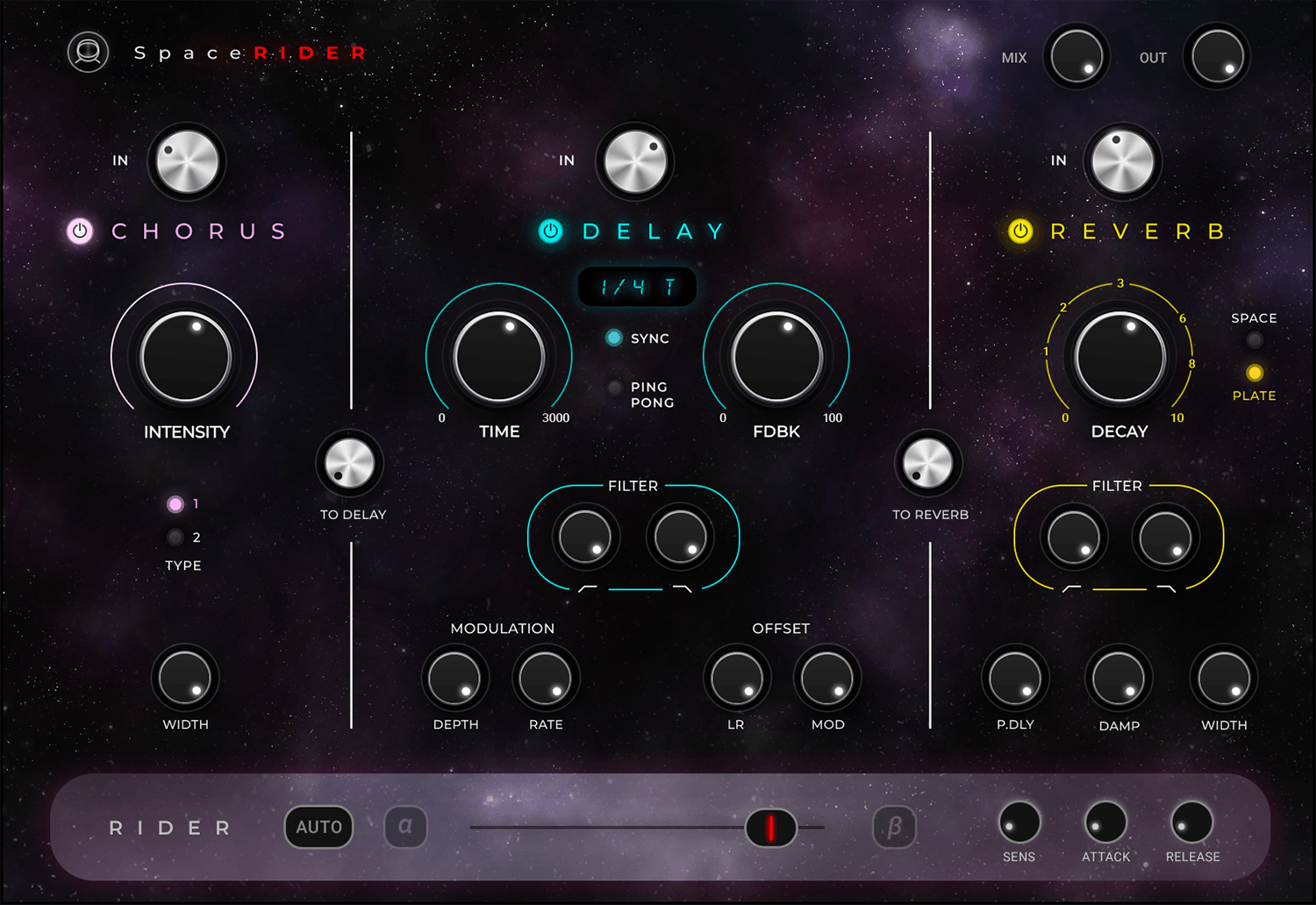
At first launch, Space Rider looks deceptively simple. The interface is clean and immediate: reverb, delay, and chorus sit side-by-side in a workflow that encourages experimentation instead of menu-diving.
Where many multi-effects plugins become cluttered or overengineered, Space Rider keeps the signal path visual and intuitive. Routing chorus into delay and delay into reverb is handled with a single knob twist instead of DAW bus gymnastics. That alone saves valuable creative momentum during sessions.
The plugin ships with newly designed algorithms inspired by both vintage processors and modern spatial FX hardware. In practice, the effects sound polished and contemporary without leaning too heavily into sterile digital territory.
The Rider: Space Rider’s Secret Weapon
The headline feature here is unquestionably the Rider.
Instead of manually drawing automation for wet levels, feedback, filter movement, or modulation depth, users can assign the Rider to nearly any parameter and create motion instantly. Add the built-in envelope follower and the plugin begins reacting dynamically to incoming audio in real time.
That means:
- Delay throws that swell naturally with vocal phrases
- Reverb tails that breathe with drum transients
- Chorus movement that evolves around melodic content
- FX transitions that feel alive instead of looped
For hip hop producers especially, this becomes a major workflow advantage. Creating atmospheric ad-libs, vocal drops, psychedelic transitions, or widening melodic loops normally involves several plugins and heavy automation editing. Space Rider condenses that into a few clicks.
In practical use, the plugin excels at making repetitive patterns feel animated without sounding overproduced.
Sound Quality
The reverbs are lush without becoming muddy, especially on vocals and ambient textures. The delays cover both clean modern repeats and darker analog-style echoes, while the chorus section offers subtle widening as well as exaggerated modulation for more experimental production.
The standout quality is cohesion.
Because all three effects live inside one ecosystem, the plugin produces a naturally glued-together spatial image. Separate third-party plugins often create disconnected ambience layers that fight each other in a mix. Space Rider avoids much of that problem.
On rap vocals, the presets immediately deliver radio-ready movement. Atmospheric vocal chains reminiscent of modern melodic rap and alternative R&B are achievable almost instantly.
Presets from Grammy-Level Engineers
A major strength is the included preset library.
Contributors include:
- Greg Wells
- Matt Schaeffer
- Tony Maserati
- Neal H Pogue
- Lu Diaz
Rather than feeling like gimmicky showcase presets, many of these are immediately usable inside modern sessions. Greg Wells’ vocal-focused presets in particular stand out for adding width and polish without overwhelming the source.
This makes Space Rider approachable for beginners while still useful for experienced engineers looking to move faster.
Workflow Advantages
Space Rider’s biggest accomplishment may simply be reducing friction.
Traditionally, building evolving spatial FX chains requires:
- Multiple send buses
- Automation lanes
- Sidechain routing
- Envelope followers
- Additional modulation plugins
Space Rider centralizes all of this into one streamlined environment. For producers working under deadlines or trying to preserve creative flow, that matters more than endless tweakability.
The plugin feels less like a technical mixing utility and more like an “instant vibe machine,” particularly for:
- Vocal production
- Transitional FX
- Trap melodies
- Ambient intros
- Psychedelic ad-libs
- Lo-fi movement
- Cinematic textures
CPU Performance & Usability
Performance remains relatively efficient considering the amount of processing occurring under the hood. Sessions stayed stable during testing even when stacking multiple instances across vocals and melodic instruments.
The interface also deserves praise for balancing depth with accessibility. Advanced users can dive into modulation behavior, while newer producers can simply load presets and start shaping space immediately.
Final Verdict
Space Rider succeeds because it solves a real production problem: creating dynamic, professional-sounding spatial effects quickly.
Instead of forcing producers into complicated routing setups and tedious automation editing, the plugin turns movement and depth into an intuitive creative process. The Rider system alone makes it one of the more genuinely innovative spatial FX tools released recently.
For hip hop and modern vocal production, Space Rider feels particularly relevant. Producers looking to inject motion, width, and atmosphere into tracks without slowing down workflow will likely get immediate value here.
At $39.99, it punches well above its price point.