














Written By: Wanjiru Waweru
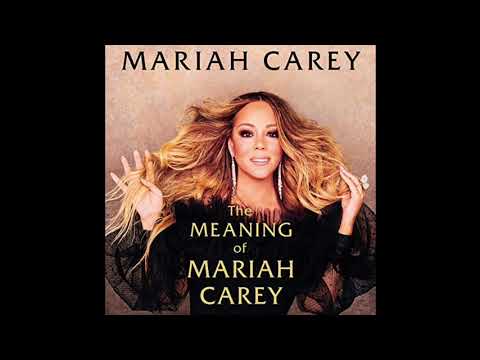
Mariah Carey’s ‘The Meaning of Mariah Carey’: A Look Inside the Memoir
Mariah Carey’s memoir, The Meaning of Mariah Carey, arrived on September 29, 2020. The book, co-written with writer and activist Michaela Angela Davis, was published by Andy Cohen Books. The six-time Grammy winner also performed the audiobook, which is exclusively available on Audible.
This deeply personal memoir takes readers on an emotional rollercoaster behind the scenes of Carey’s life, from her challenging childhood to her abusive marriage with music executive Tommy Mottola. The book is structured into four distinct sections: “Wayward Child,” “Sing. Sing.,” “All That Glitters,” and “Emancipation.”
Section 1: The “Wayward Child”
The first section, “Wayward Child,” details the rocky early years of Carey’s life. She grew up in a biracial family and experienced her parents’ divorce at the tender age of four. Her childhood was steeped in dysfunction, creating a deep well of pain that she would later channel into her music.
Carey’s home life was unstable, to say the least. Her father, Alfred, was often absent, while her brother, Morgan, developed violent behavior, and her sister, Allison, struggled with drugs and prostitution. In contrast to this chaos, Carey became very close with her mother, Patricia, whom she deeply admired.
Patricia, an opera singer, was a source of light and inspiration. She began teaching Carey to harmonize at age three and later introduced her to jazz music. The singer also found solace in mainstream music, listening in her mother’s car to artists like Rockwell and Michael Jackson. Carey mentions her adoration for two iconic figures: Olivia Newton-John and Marilyn Monroe.
However, her sister Allison contributed significantly to Carey’s trauma. In a shocking incident, Allison gave Carey a third-degree burn and introduced her to a world of prostitution and her pimp boyfriend. This environment was the antithesis of who Carey wanted to be. She turned to music for comfort and therapy, feeling like an outcast who never fit in. The song “All I Want For Christmas Is You” was born out of this deep-seated pain, a longing for the happy family holidays she never had. Carey explained that music made her feel special, counteracting the insecurity she felt in her daily life.
Section 2: The “Sing. Sing.” Prison
The second section, “Sing. Sing.,” opens with Carey’s toxic marriage to Tommy Mottola. She describes the relationship as a prison, where she was humiliated by his control, forbidden from seeing friends and family, and unable to leave the house. She had lost the freedom she had initially tasted when she moved to New York City at seventeen.
Before her rise to fame, Carey worked odd jobs to make ends meet, wearing the same shoes daily. Despite the hardship, she stayed grounded and avoided risky behavior, focusing on her dream. Her big break came when she met and befriended singer Brenda K. Starr.
Starr took Carey under her wing and brought her to a party where she met Tommy Mottola. Carey felt creeped out by his romantic interest and walked away, but Starr gave him her demo tape. Mottola, then the President of Sony Music, was impressed, leading to a record deal with Columbia Records. While this deal gave her financial freedom and a million-dollar apartment, it was not the fairy tale it seemed.
Carey’s life with Mottola was highly restrictive. They lived in the Bedford Mansion, which she dubbed the “Sing. Sing.” prison, complete with surveillance cameras and constant security. She felt like a teenage daughter being controlled by a father. Mottola saw her potential but wanted to control her image, forbidding her from acting roles and dismissing her interest in Hip-Hop as a “passing fad.” Their wedding day was a disaster, with Mottola dictating a more “European” look. He even tried to sabotage her career by giving a sample she had planned for her song “Loverboy” to Jennifer Lopez.
Section 3: Emancipation and the Butterfly
It wasn’t until she took control of her destiny that she found the strength to leave Mottola. Carey filed for divorce, and her 1997 album, Butterfly, became a powerful symbol of her healing process. She gained independence and leaned into her preferred Hip-Hop and R&B sound.
Her relationship with baseball star Derek Jeter was a bright spot, inspiring songs like “The Roof” and “Honey.” Following the divorce, Carey visited Sony Music’s president in Japan to prevent Mottola from continuing to control her career. Her subsequent albums, Rainbow and the compilation #1’s, were part of her journey to heal and move forward.
The Glitter soundtrack and her time with Virgin Records were a challenging period for the singer. After a very public emotional meltdown, she parted ways with the label and signed with Island Records. She reintroduced herself with The Emancipation of Mimi in 2005, which she called a “spiritual evolution.” The lead single, “We Belong Together,” became one of the biggest hits of the decade, solidifying her legendary status.
A Life of Highs and Lows
The memoir also highlights her successful foray into acting, with roles in acclaimed movies like Precious. Carey also shares warm memories of her friendships and encounters with legends like Whitney Houston, Aretha Franklin, Prince, Stevie Wonder, and Nelson Mandela.
Carey’s personal life continued to have its share of ups and downs. Her marriage to Nick Cannon, which produced her twins, Roc and Roe, was short-lived. However, the memoir closes on a triumphant note, celebrating when her iconic holiday song “All I Want For Christmas Is You” finally reached number one on the Billboard Hot 100, nearly three decades after its release.
‘I work on my emotional recovery daily’: Mariah Carey reveals true vulnerability in new memoir
Author Media Links:
https://twitter.com/_wwaweru
https://wanjiruwaweru.weebly.com/
https://www.linkedin.com/in/wanjiru-waweru-75b3421b7/
EMAIL
👉 Read more Music Articles:
https://dopetrackz.com/category/music-articles/